The geotechnical contrast between Portland's west hills and the central eastside industrial district couldn't be starker. On a project near Forest Park, weathered basalt and stiff silts provide bearing capacities exceeding 4,000 psf with minimal settlement risk. Move three miles east to a site in the Central Eastside along the Willamette River, and you're dealing with 15 to 30 feet of compressible alluvial deposits overlying the Troutdale Formation—where a poorly designed shallow foundation can settle differentially by over an inch within the first five years. Portland's soil map shifts radically within a half-mile radius, and a generic bearing pressure assumption simply doesn't work here. When we design shallow foundations in Portland, the first step is always correlating site-specific SPT data from our SPT drilling program with laboratory consolidation tests to define the actual settlement curve, not just the presumptive values in Table 1806.2 of the Oregon Structural Specialty Code.
Portland's soil variability demands that every shallow foundation design reconcile bearing capacity with seismic settlement—not just one or the other.
Service characteristics in Portland Oregon
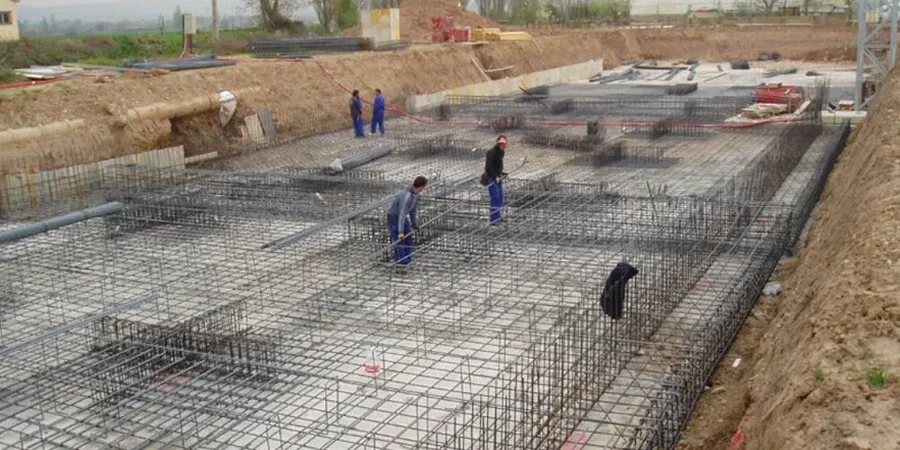
Local geotechnical conditions in Portland Oregon
The most common error we see with shallow foundations in Portland is treating liquefaction-induced settlement as a separate problem from static bearing capacity. On a recent warehouse project in the Columbia Corridor, the geotechnical consultant correctly identified liquefiable sands at 8 to 14 feet depth per ASCE 7-22 screening criteria, but then recommended standard spread footings with no mitigation. The structural design satisfied static bearing checks, yet the post-liquefaction reconsolidation settlement analysis—which should have been mandatory under IBC Section 1803.5.12—was omitted entirely. A magnitude 9.0 Cascadia event would produce enough excess pore pressure in those clean sands to drop the floor slab by 4 to 6 inches unevenly, rendering the structure unusable. Portland sits squarely within the Cascadia subduction zone's shaking footprint, and any shallow foundation design that doesn't quantify seismic settlement under the design earthquake (2,475-year return period) is incomplete. We run SPT-based liquefaction triggering analyses using the updated Seed & Idriss (NCEER) framework, then calculate total volumetric strain from the Ishihara & Yoshimine curves to give the structural team realistic post-event performance expectations.
Our services
Our shallow foundation scope in Portland covers the full analysis chain from field investigation through final bearing capacity recommendations. Each deliverable includes a signed, sealed report meeting the City of Portland Bureau of Development Services submittal requirements.
Bearing Capacity and Settlement Analysis
We compute allowable bearing pressure using Vesic's general shear equations with strength parameters derived from SPT correlations and laboratory triaxial testing. Immediate settlement is calculated via Schmertmann's method; consolidation settlement uses Casagrande's graphical reconstruction from oedometer curves. Results are presented as load-settlement curves for the structural engineer.
Seismic Liquefaction Assessment
For sites mapped as liquefaction hazard zones by DOGAMI or within the Holocene alluvial units of the Willamette Valley, we perform SPT-based cyclic stress ratio analysis with magnitude scaling factor for the Cascadia source (Mw 9.0). Post-liquefaction volumetric strain and lateral spreading displacement estimates follow the procedures in ASCE 7-22 Section 12.13.
Mat Foundation Optimization
When strip or isolated footings yield excessive differential settlement, we evaluate mat (raft) foundation alternatives using Winkler spring models calibrated to the site's modulus of subgrade reaction. We iterate mat thickness and plan dimensions until total settlement and angular distortion meet IBC Table 1604.3 limits.
Common questions
What does shallow foundation design cost for a typical Portland commercial building?
For a commercial structure with a 5,000 to 10,000 square foot footprint in the Portland metro area, our shallow foundation design package—including SPT drilling, laboratory testing, bearing capacity analysis, and a sealed report—typically ranges from US$1,770 to US$2,730. The final cost depends on the number of borings required, depth to competent bearing stratum, and whether seismic liquefaction analysis is triggered by the site's mapped hazard zone.
How deep do you need to investigate for a shallow foundation in Portland's alluvial soils?
The Oregon Structural Specialty Code requires borings to extend to a depth where the net stress increase from the foundation is less than 10% of the existing effective overburden stress. In Portland's Willamette Valley alluvium, this often means 25 to 35 feet below the proposed footing elevation. If the Troutdale Formation or competent gravels are encountered shallower, we still sample at least 10 feet into that bearing stratum to confirm it is not a thin lens over softer material.
What's the difference between allowable bearing pressure and ultimate bearing capacity in your reports?
Ultimate bearing capacity is the theoretical pressure at which the soil fails in shear, calculated using Vesic's bearing capacity equation with undrained shear strength or drained friction angle from our lab tests. Allowable bearing pressure divides that ultimate value by a factor of safety (typically 3.0 for static conditions per IBC) and further reduces it if settlement calculations indicate that the tolerable settlement—usually 1 inch total and 0.5 inch differential for conventional structures—would be exceeded at a lower pressure. The controlling value is always the lower of the two.