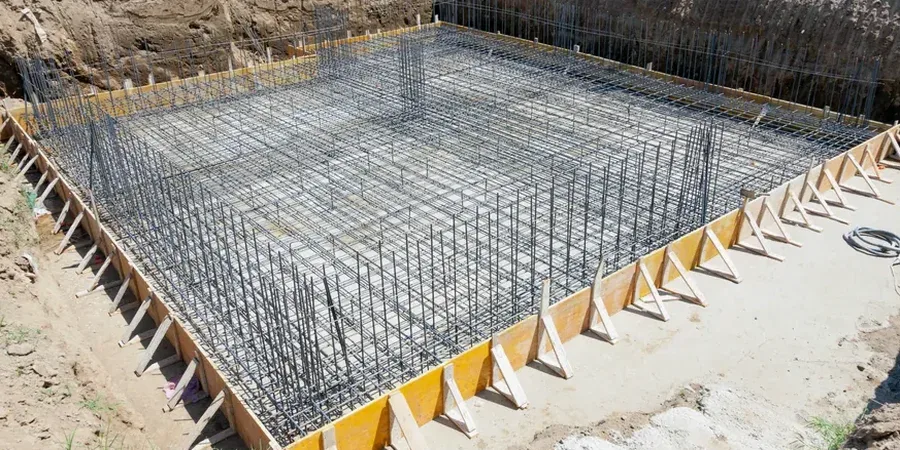
The International Building Code (IBC) and ASCE 7 set a high bar for structural integrity in seismic zones, and Portland’s location in the Cascadia Subduction Zone makes adherence to these standards non-negotiable. A raft or mat foundation becomes the preferred solution when bearing soils are marginal or highly variable across the footprint of a structure. We routinely encounter this in the alluvial deposits along the Willamette River and the silty clays of the Portland Basin. Our design process starts with a rigorous interpretation of subsurface data, often integrating results from an SPT drilling program to map the vertical and lateral extent of soft layers. The goal is to deliver a foundation system that distributes structural loads over a wide area, minimizing the risk of differential settlement that can compromise wood-frame, steel, or concrete buildings in this region.
A properly designed mat foundation transforms a marginal site into a buildable one, distributing load where isolated footings would fail.
Service characteristics in Portland Oregon
Local geotechnical conditions in Portland Oregon
A six-story mixed-use project on North Interstate Avenue encountered a lens of soft, saturated silt at 15 feet depth that was not fully delineated by a preliminary exploration. The initial design called for isolated footings, but our detailed boring logs showed the potential for over 2 inches of differential settlement across the column grid. Ignoring this condition would have led to cracked partition walls and binding elevator doors within the first five years. We re-engineered the foundation as a cellular mat with deepened ribs under the heaviest columns. The excavation monitoring confirmed the depth of the soft layer, and the pour was completed with high-strength concrete specified for sulfate exposure common in Portland’s urban fill. This kind of proactive redesign avoids costly post-construction litigation.
Our services
Our mat foundation design work is fully integrated with field investigation and laboratory testing. Every calculation is backed by measured soil parameters, not just textbook assumptions.
Geotechnical Investigation for Mat Foundations
We execute SPT borings, CPT soundings, and test pits to define the soil profile precisely. Disturbed and undisturbed samples are collected for laboratory classification and strength testing, providing the input parameters needed for finite element modeling of the soil-structure interaction.
Structural Design and Settlement Analysis
Using the soil report, we design the mat thickness, reinforcement layout, and rib beam geometry. Settlement calculations are performed under dead plus sustained live loads, with immediate and consolidation components separated. The final design package is sealed by a professional engineer registered in Oregon.
Common questions
When is a mat foundation necessary instead of isolated footings in Portland?
A mat foundation is typically required when the allowable bearing pressure of the soil is low, the total load exceeds 50% of the site’s bearing capacity, or when the structure is sensitive to differential settlement. In Portland, we often specify mats on sites underlain by compressible alluvium or fill, or where the water table is high and buoyancy forces must be resisted. The IBC mandates a mat when footings would cover more than half the building footprint.
What is the typical cost range for a raft foundation design in Portland?
The design and investigation package generally ranges from US$940 to US$4,040, depending on the building footprint, number of borings required, and complexity of the settlement analysis. A small single-family residence on a flat lot falls toward the lower end, while a multi-story commercial structure with poor soil and high seismic demands is at the upper end.
How does the Cascadia seismic risk affect mat foundation design?
The Cascadia Subduction Zone presents a risk of long-duration shaking and potential liquefaction in loose, saturated sands near the Columbia River. Our designs account for this by checking bearing capacity under seismic load combinations from ASCE 7, detailing the mat for moment and shear reversal, and specifying compaction or stone column improvement where liquefaction susceptibility is identified. The goal is to prevent loss of support and maintain structural integrity during a major earthquake.