ASCE 7 seismic provisions govern nearly every deep foundation in Portland. The city sits on a complex mix of alluvial deposits, Missoula Flood silts, and volcanic bedrock. We design pile foundations that transfer structural loads past the weak near-surface soils. Portland's high seismic hazard—driven by the Cascadia Subduction Zone—demands lateral load analysis that generic designs miss. Site-specific ground motion parameters from the USGS hazard tool feed directly into our models. For projects in the Willamette Valley, we often combine subsurface data from CPT testing with lab strength tests to build accurate p-y curves. Liquefaction potential in saturated silts is real here. The Oregon Structural Specialty Code requires it. We run the analysis and size the piles accordingly.
Portland's liquefiable silts demand pile designs that handle lateral spreading, not just vertical loads.
Service characteristics in Portland Oregon
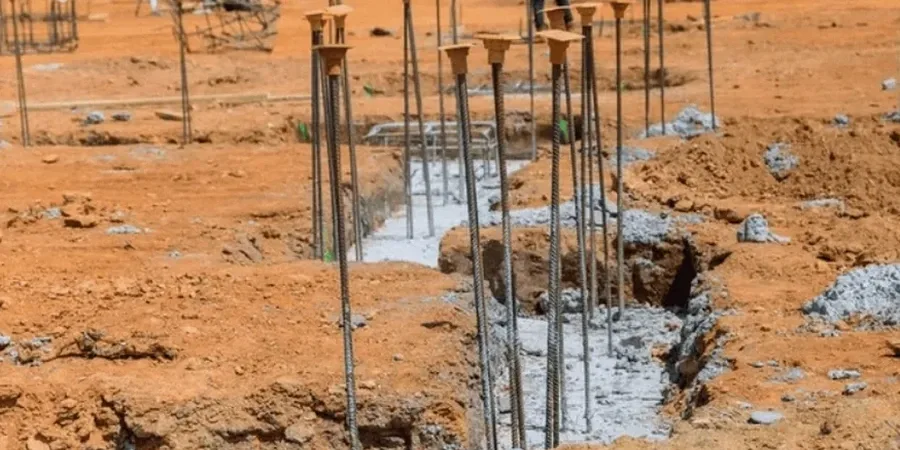
Local geotechnical conditions in Portland Oregon
A crawler-mounted drill rig with hollow-stem augers or a driven pile hammer sets up on site. The first risk is encountering cobbles in the Troutdale Formation. Refusal on boulders forces a change from driven piles to drilled shafts fast. Portland's winter water table rises dramatically. High groundwater complicates concrete placement for cast-in-place piles. We require temporary casing or slurry displacement methods. Vibrations from impact hammers can damage adjacent historic masonry—common in inner Southeast and Northwest Portland. Pre-drilling or vibratory hammers mitigate this. The biggest structural risk is downdrag. As the soft silts consolidate under fill or new loads, they grip the pile shaft and add negative skin friction. We estimate downdrag loads from consolidation test data and add them to the structural load case.
Our services
Our pile design work covers the full project cycle. We start with a desktop study of published geologic maps—DOGAMI lidar data is invaluable in Portland—then move to field investigation, analysis, and construction oversight.
Axial and Lateral Capacity Design
We compute ultimate and allowable capacities for single piles and groups. Analysis includes end bearing, skin friction, lateral deflection, and moment distribution under seismic and wind loads.
Pile Load Test Program Management
We write the test specifications, oversee static load tests (ASTM D1143) and high-strain dynamic tests (PDA/CAPWAP), and interpret the results to refine the production pile design.
Construction Phase Engineering Support
We review submittals, evaluate pile driving logs, confirm tip elevations, and address field changes when actual soil conditions differ from the geotechnical baseline report.
Common questions
What does pile foundation design cost for a Portland project?
Engineering fees for pile design typically range from US$1,780 for a straightforward single-family residence analysis to US$6,760 for a multi-story commercial building with complex seismic and liquefaction requirements. The final cost depends on the number of piles, the depth to competent bearing strata, and the testing program scope.
How deep do piles need to go in Portland?
Depth varies by location. In downtown Portland and the Central Eastside, piles often extend 40 to 80 feet to reach the Troutdale Formation gravels. In the Tualatin Valley, depths can exceed 100 feet where the gravels dip deeper. We determine the target tip elevation from CPT soundings and soil borings.
Which pile type works best in Portland's soils?
Driven H-piles and pipe piles perform well in the dense gravels of the Troutdale Formation. Drilled shafts are preferred in urban areas with vibration restrictions or where large lateral loads require a stiffer section. We select the type based on load, access, and soil conditions.
Do I need a pile load test for my project?
IBC Chapter 18 requires load testing for most projects unless the design is based on sufficient local precedent. We typically recommend at least one static load test or high-strain dynamic test per site to verify capacity and refine the design, which often reduces the factor of safety and pile quantity.
How does the Cascadia Subduction Zone affect pile design?
The Cascadia Subduction Zone produces long-duration shaking and high spectral accelerations at long periods. This increases lateral demands on piles and can trigger widespread liquefaction in Portland's saturated silty soils. Our designs account for kinematic soil-pile interaction and lateral spreading displacement demands under the MCE ground motion.