A CME‑75 track rig with an auto‑hammer set at 30 inches of drop hits the anvil 50 times while the split‑spoon barrel advances 18 inches into Portland’s layered alluvium. That is the Standard Penetration Test as we execute it — no shortcuts, no hand‑held safety hammers. The N‑value we log in the field is only useful if the energy transfer is calibrated, the casing is clean, and the driller knows exactly when to switch from drilling to sampling in the Troutdale Formation cobbles. We run SPT alongside CPT soundings when the stratigraphy suggests interbedded silts that smear during dynamic sampling, giving your geotechnical engineer two data sets to correlate. Our crews work from the West Hills to Gresham, and every borehole is logged with USCS classifications on‑site before the samples ever leave the truck.
An uncalibrated hammer in Portland’s silts can overestimate N‑values by 20‑30%, leading to foundation designs that miss liquefiable layers.
Service characteristics in Portland Oregon
The standard test sequence we follow:
- Advance casing through fill to native soil, clean out to bottom.
- Drive 2‑inch OD split spoon with 140‑lb hammer at 30‑inch drop, counting blows per 6‑inch increment.
- Record N‑value as sum of second and third increments; note any liner loss, gravel plugging, or water inflow.
- Bag sample immediately, label with depth and USCS field classification, store in sealed container for lab transfer.
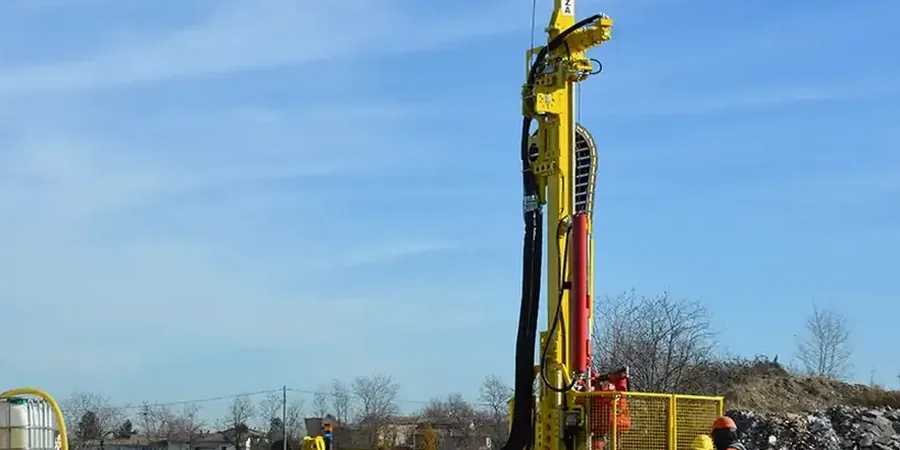
Local geotechnical conditions in Portland Oregon
The mistake we see repeatedly in Portland is contractors running SPT with water‑flush rotary rigs and no casing through the Portland Hills Silt, then wondering why the N‑values jump from 4 to refusal in three feet. That silt collapses into the borehole, you sample reworked material, and the structural engineer designs footings for a soil that does not exist. Worse is using an uncalibrated donut hammer on a safety‑hammer rig and reporting raw N‑values without energy correction. For a five‑story wood‑frame over podium on NE Sandy Boulevard, that error can shift the site class from D to E and trigger a seismic redesign. We calibrate every hammer with P‑wave velocity measurements and report N60 values only. The Oregon Structural Specialty Code references ASCE 7 site classification directly — faking N‑values is a liability no EOR should carry.
Our services
We package SPT drilling with the services Portland structural and geotechnical engineers request most for mid‑rise and infrastructure projects.
SPT with Energy Calibration
Every rig carries P‑wave instrumentation for hammer energy measurement. We deliver N60 values, not raw N, with the calibration certificate attached to the log.
Liquefaction‑Triggering SPT Suites
For sites east of the Willamette with shallow groundwater, we run SPT borings to 60+ feet and provide clean‑sand‑equivalent data formatted for Idriss‑Boulanger analysis.
Combined SPT‑CPT Site Characterization
When the stratigraphy mixes silt and sand — typical along the Columbia Slough — we pair SPT borings with CPT soundings on the same grid to resolve thin layer discrimination.
Common questions
How much does an SPT boring cost in Portland?
A single SPT boring to 30 feet in typical Portland alluvium runs US$580–US$750, including rig mobilization within the metro area, field logging, and the N60‑calibrated report. Deeper borings, confined access sites, or projects requiring traffic control on streets like SE Division add to the total. We quote per boring, not per foot, so you know the exact number before we mobilize.
How deep do you drill SPT borings for a Portland building permit?
The City of Portland Bureau of Development Services typically requires borings to at least 30 feet below grade, or to refusal on competent Troutdale Formation, whichever is deeper. For structures over three stories or sites mapped in Seismic Site Class E or F, we routinely extend borings to 50–60 feet to satisfy ASCE 7 site classification requirements.
What is the difference between raw N and N60?
Raw N is the blow count the driller records during the SPT. N60 corrects that number to 60% of the theoretical hammer energy, removing the effect of hammer type, rod length, and sampler configuration. In Portland’s silts, a raw N of 15 often becomes an N60 of 10–12. Structural engineers need N60 for liquefaction analysis and bearing capacity calculations — using raw N leads to unconservative designs.
Do you handle traffic control for SPT drilling on Portland streets?
Yes. We coordinate with PBOT for lane closure permits when drilling in the public right‑of‑way. Our crews carry flagger certification and set up MUTCD‑compliant traffic control. For borings on arterials like SE Powell or N Lombard, we schedule night work when volumes drop, minimizing disruption.
How fast do you deliver the SPT logs after drilling?
Field logs with raw N‑values, sample descriptions, and groundwater notes are available same‑day by email. The final engineering report with N60 corrections, USCS classifications, and borehole location diagrams is delivered within three business days. Rush turnaround within 24 hours is available for projects on tight permit deadlines.